Case Study · Mobile App Design
SmileMaker
A dental discovery platform that helps patients find the right professionals based on their specific needs, reducing uncertainty and creating more informed healthcare decisions.
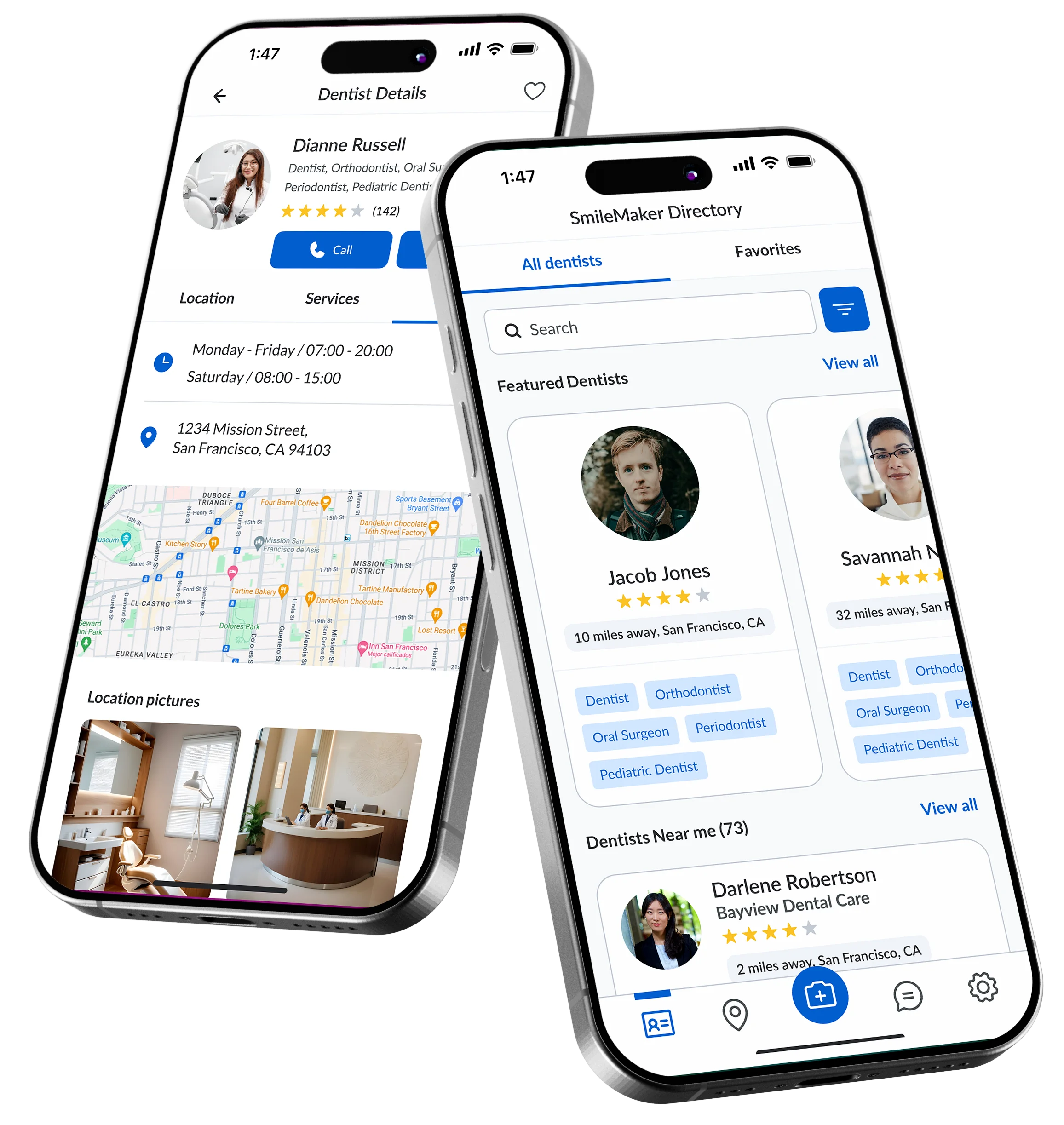
Build trust before the appointment.
Finding a dentist often creates uncertainty for patients, especially when treatment needs become more specialized. SmileMaker was designed to reduce decision anxiety by helping users discover professionals that fit their specific conditions while creating transparency and confidence throughout the selection process.
Understanding SmileMaker
SmileMaker came to us with a clear problem: choosing a dentist is an exercise in trust as much as logistics, and most platforms were built around bare listings instead of reassurance. The design challenge was making a sensitive, anxiety-prone decision feel guided and calm, without slowing down patients who just need fast, reliable information.

Knowing Who We're Designing For
Before designing a single screen, we mapped the competitive landscape, segmented the patient base, built personas, traced the path from first symptom to booked appointment, and defined user stories, ensuring every decision reduced friction for someone already feeling anxious.
Mapping the Market
No existing platform combines specialty filtering, trust-building profiles, and direct patient-provider contact in a dental-focused context.
| Platform | Specialty Filter | Trust Profile | Direct Contact | Dental Only | Anxiety Design |
|---|---|---|---|---|---|
| Google Maps | No | Partial | No | No | No |
| Zocdoc | Yes | Partial | Yes | No | No |
| Healthgrades | Yes | Yes | No | No | No |
| 1-800-Dentist | No | No | Yes | Yes | No |
| SmileMaker | Yes | Yes | Yes | Yes | Yes |
Who Uses Healthcare Apps
Four distinct segments emerged, each with different levels of dental anxiety and different information needs before making an appointment decision.
18-32. High dental anxiety, no established dentist. Need reassurance and transparency above everything else.
30-50. Diagnosed condition requiring a specific type of professional. Need specialty filtering and credential depth.
25-45. Busy professionals. Location, availability, and fast contact are the primary decision drivers.
30-50. Searching for pediatric or family dentists. Safety, reviews, and office environment matter most.
Designing for Real People
Three archetypes distilled from 24 user interviews and 180 survey responses, representing the core emotional and functional needs of the platform.
From Anxiety to Appointment
The current journey is fragmented and emotionally draining. SmileMaker compresses six painful steps into a guided, trust-first flow.
- Step 01Trigger: Pain or routine needUser experiences discomfort or receives a reminder that it has been too long since their last visit.Uncertain
- Step 02Search: Google, Maps, word-of-mouthResults are generic and overwhelming. No way to filter by condition or communication style.Frustrated
- Step 03Evaluate: Read reviews, check websiteReviews are unverified, websites are outdated, and it is hard to gauge the human behind the practice.Anxious
- Step 04Contact: Call the officeHaving to call creates friction for anxious patients. Many abandon at this point.Stressed
- Step 05Book: Commit to appointmentWithout prior connection or context, the commitment still feels like a leap of faith.Reluctant
- Step 06Attend: Show up to the appointmentSmileMaker redesigns this moment, users arrive having already built trust with their provider.Confident
What Users Actually Need
Distilled from persona research and journey mapping, these stories defined the feature scope for the first version of SmileMaker.
- US-01 As a patient with dental anxiety, I want to read about the dentist's approach and bedside manner before contacting them, so I feel comfortable before committing.
- US-02 As a patient with a specific condition, I want to filter dentists by specialty and procedure type, so I only see providers qualified for my situation.
- US-03 As a busy professional, I want to send a message to a dentist without calling, so I can inquire about availability at my own pace.
- US-04 As a new patient, I want to see verified credentials, real photos, and treatment explanations in the provider profile, so I can make an informed, confident decision.
- US-05 As a parent, I want to read other parents' experiences and see the office environment before booking for my child, so I know it is a safe and welcoming space.
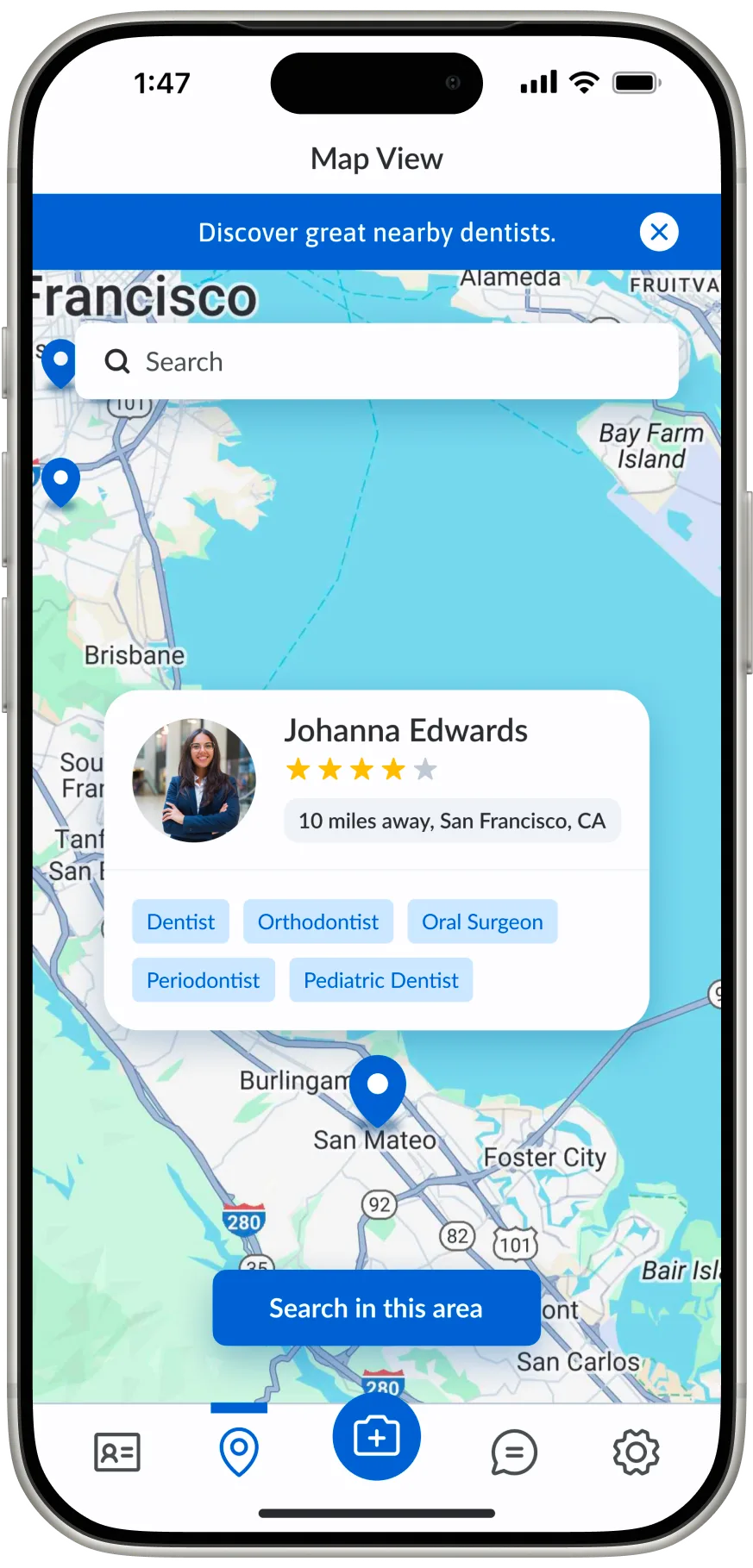
- US-06 As any user, I want to find dentists near me on a map sorted by proximity, so I do not have to calculate travel time manually.
Color, Type, and the Language of Trust
Colors and a strong style guide establish the visual identity of an app. The right palette conveys emotions and sets the tone for interactions. For SmileMaker, we chose a system that communicates professional reliability while staying approachable, a comprehensive style guide ensuring consistency across every touchpoint.
(600) HEX #005ECD Accessibility: 5.57:1 AA
(400) HEX #3C90F3 Accessibility: 3.05:1 AA Large
(Black) HEX #0F1010 Accessibility: 20.35:1 AAA
(BG 50) HEX #F5F7FA Accessibility: 18.0:1 AAA
Where We Landed
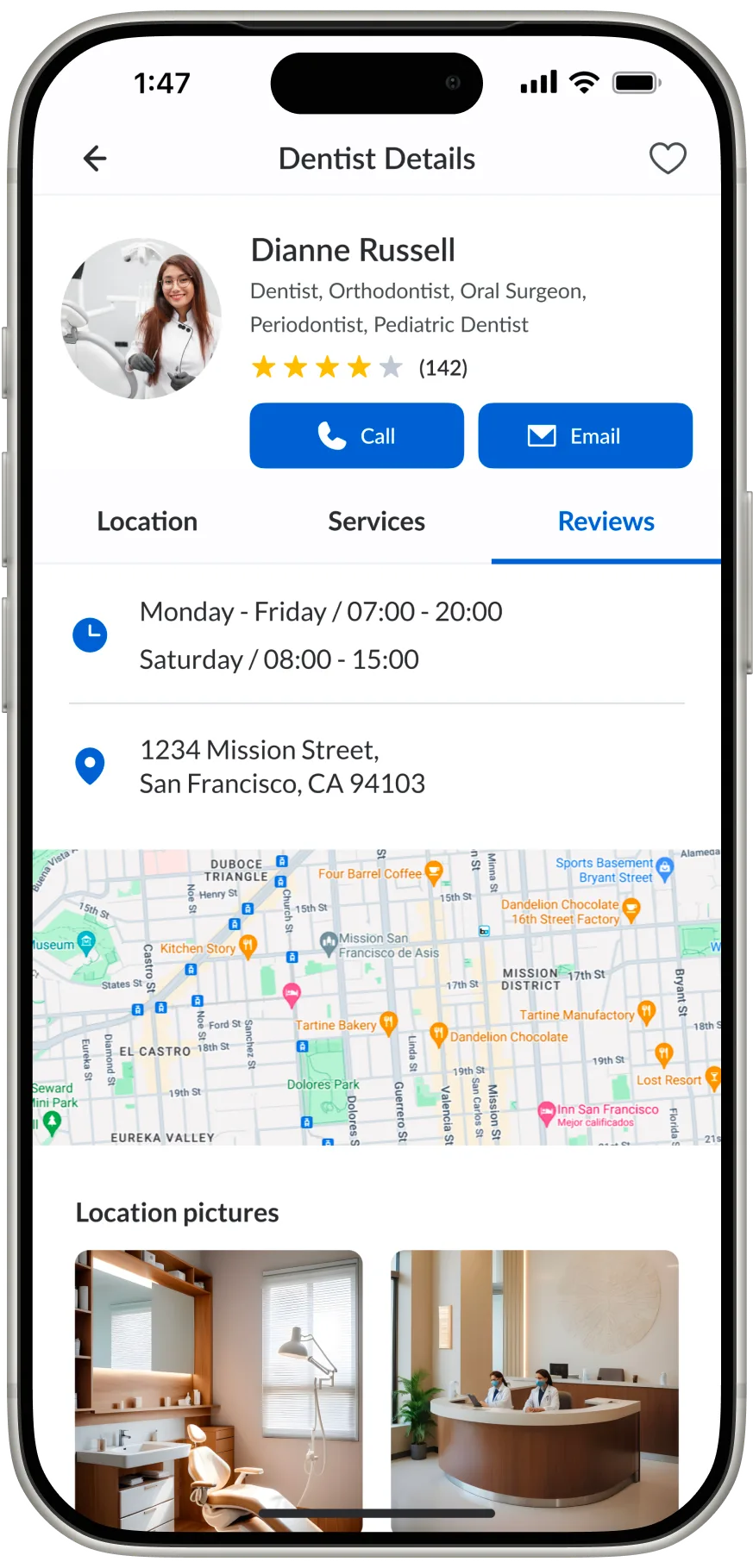
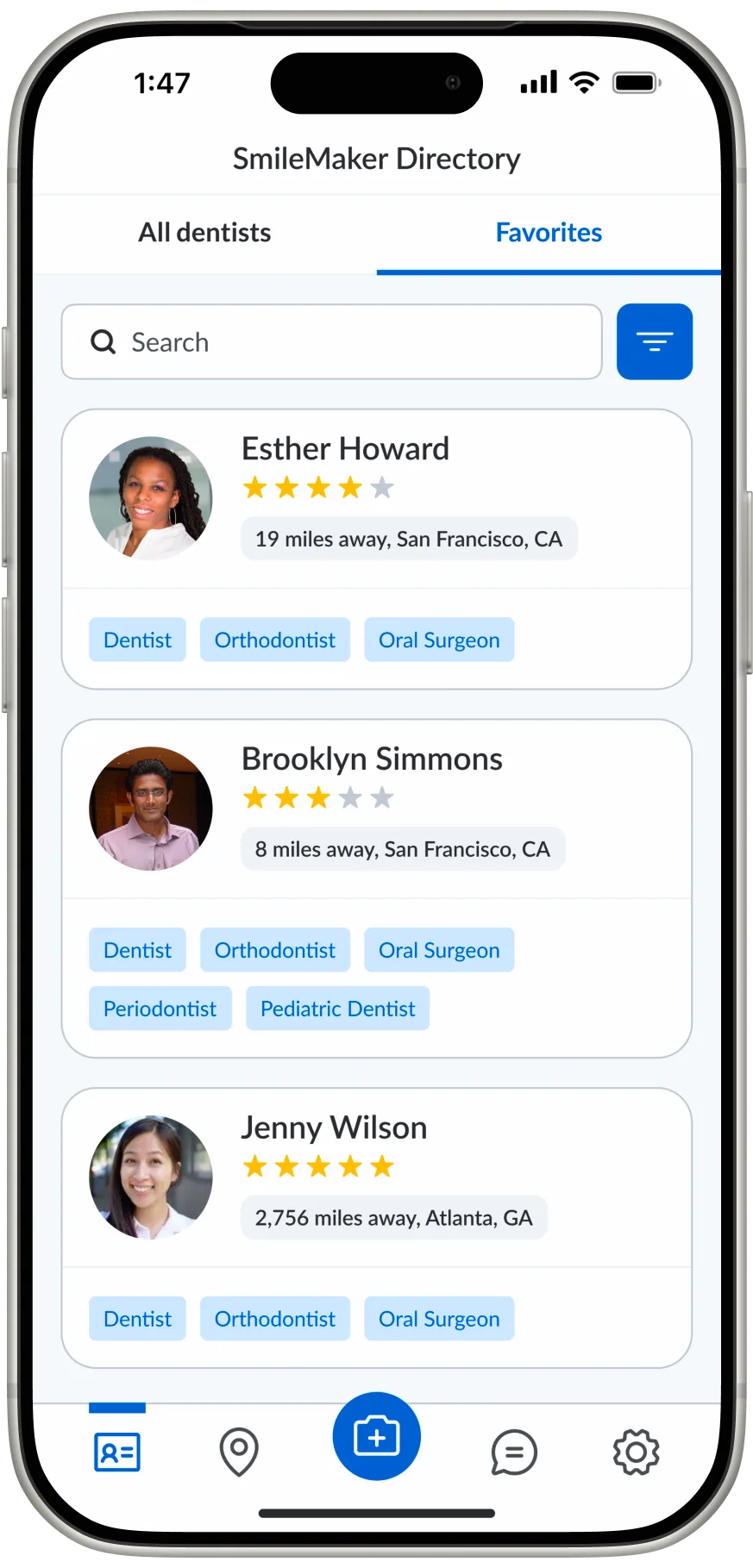
The main challenge was balancing information density with clarity. SmileMaker deals with sensitive healthcare decisions, and users needed to feel guided without feeling overwhelmed. The final UI uses progressive disclosure, smart defaults, and a reassuring tone that connects search with trust before any appointment is made.


Your product,
built right.
SmileMaker showed what's possible when design starts with the user's anxiety, not the feature list. If you're building something where trust is the product, let's talk.